From the trachea to the alveoli, branching of the airway occurs approximately 23 times.
Flow of gas resulting from respiratory effort only occurs down to division 16. Below this, gases move passively by diffusion along partial pressure gradients, between the alveoli and higher airways.
These partial pressure gradients are maintained by continued ventilation (adding more O2 and removing CO2 at the top) and perfusion (removing O2 and adding CO2 at the bottom).
The upper airways (anatomical dead-space) simply conduct gas to the lower part of the respiratory tree, where gas exchange with the blood takes place (alveolar ventilation).
Question: In what structures does gas exchange first take place?
Click here for answer.
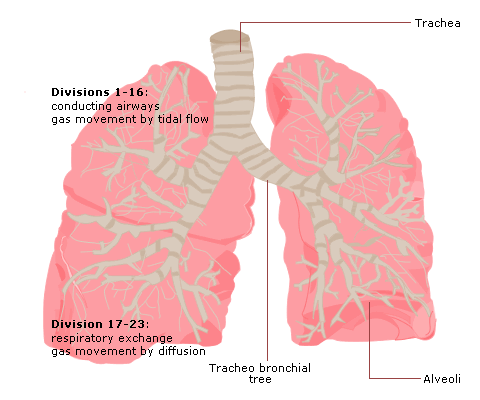
From the trachea to the alveoli, branching of the airway occurs approximately 23 times.
Flow of gas resulting from respiratory effort only occurs down to division 16. Below this, gases move passively by diffusion along partial pressure gradients, between the alveoli and higher airways.
These partial pressure gradients are maintained by continued ventilation (adding more O2 and removing CO2 at the top) and perfusion (removing O2 and adding CO2 at the bottom).
The upper airways (anatomical dead-space) simply conduct gas to the lower part of the respiratory tree, where gas exchange with the blood takes place (alveolar ventilation).
Question: In what structures does gas exchange first take place?
Answer: Respiratory bronchioles.