Strategies
Premedication strategies for reducing the risk of acid aspiration may include the use of:
Premedication strategies for reducing the risk of acid aspiration may include the use of:
- Antacids
Antacids increase the pH of the stomach, but do not alter the volume. They have a limited duration of action and so are of limited value at the end of the anaesthetic when the patient is still at risk of aspiration.
Only sodium citrate is used regularly nowadays, particularly in the obstetric setting.
Premedication strategies for reducing the risk of acid aspiration may include the use of:
- Antacids
- PPIs and H2 antagonists
PPIs and H2 antagonists are useful agents as they increase gastric pH and reduce gastric volume, which are the aims of premedication in this setting. PPIs increase the pH to a greater extent, although neither group of drugs produces a maximal effect after a single dose.
Commonly used examples of each type of agent are:
| PPI: | Omeprazole, 20 mg orally |
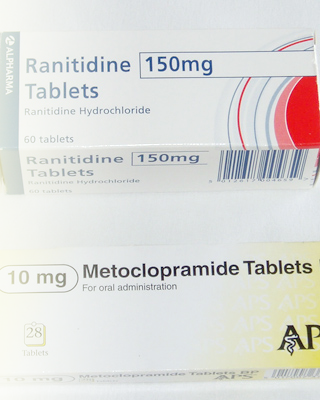
| H2 antagonist: | Ranitidine, 150 mg orally |
Either PPIs or H2 Receptor Antagonists may also be used to protect against the common side-effect of gastric irritation seen with non-steroidal anti-inflammatory drugs (NSAIDs), which may also be given as a premedication.
Premedication strategies for reducing the risk of acid aspiration may include the use of:
- Antacids
- PPIs and H2 antagonists
- Metoclopramide
Metoclopramide increases gastric emptying and therefore reduces gastric volume. It has been widely used as an antiemetic, but with limited evidence of efficacy from randomized, controlled trials.
It may also reduce the transit time for drugs to reach the small bowel where they are absorbed, thereby speeding their onset.
The appropriate oral dose for premedication is 10-20 mg.